An article in the Register tries to deal with the ongoing massive violation of private individuals' lives and integrity by the NSA by invoking the principles underlying the US Constitution.
Trevor Pott: NSA Prism - boycott US tech
I commented:
Let's think historically, since the Enlightenment and Hammurabi have eased the way for us here.
The productive forces of human society are enormous and constantly growing, and one of the things they are doing is connect us all up so we know what's happening to everything everywhere, as in automatic inventory, just-in-time production and delivery etc. We also know who's where and doing what.
Now, the last time the productive forces of humanity took a huge leap forward in world-changing historical terms was when the merchants and bankers turned themselves into manufacturers, and the city took over from the land. Aka the origin of capitalism. This took centuries, but gradually, from the Reformation around 1500 to the French Revolution around 1800 via the English Revolution of around 1650, feudalism as a mode of production and fundamental form of social organization was ejected, violently, and replaced by capitalism. This happened because the productive forces were tied down and being strangled. Workers under feudalism weren't free but tied to the land as serfs, to guilds as apprentices and journeymen, and to lords and masters as servants, and the same went for the means of production. Capital couldn't be bought or sold or moved at will, but was locked into traditional and inefficient niches. The battle for freedom for capital and labour freed them up, and with them the productive forces.
This is happening today only now it is capitalism that is tying everything down and holding everything back in the name of private ownership of the forces of production and the profit this must generate. We can now produce everything we need to feed, clothe, house, educate and thrill everybody. We have the physical means in the machines, the agricultural capability, and above all the science and technology to manage, develop and plan worldwide deployment of production and the requisite skills. However...
The feudal constraints on business, movement, thought, etc are now parallelled by capitalist constraints on the free exchange of ideas or of scientific and technological discoveries, in the form of copyright and patents, and on a more and more bizarre insistence on holding back production to protect profits. Housing construction for instance only occurs when a) it doesn't threaten rent incomes, and b) it not only generates a surplus over labour and materials input, but a whopping great ten percent more in money terms that is pocketed by the owners of building companies to consume as they and only they see fit. Diamond-studded dog collars and all.
Not to mention the boosting of private profits by a) taxing workers' incomes to subsidize corporations (corporate welfare) and b) shovelling huge amounts of the surplus we produce into totally unproductive branches of industry (death and destruction in the military, and misery and ignorance in addiction, sex industries and gambling).
Anyway, the crises we are going through right now and the surrealistic abuse of advances in science and technology perpetrated by governments like the US, are all part and parcel of the age of transition between an outworn mode of production, capitalism, and a mode of production more appropriate for the productive forces of human society, socialism.
One of the things capitalism is doing in its death throes is throwing off a spectacular display of sound and fury and phosphorescing lights claiming that it is the end product of human history and that there is no alternative to its methods and traditions. This has been pretty successful at fooling "public opinion" that history doesn't exist and that socialism is an impossible illusion.
One of the things the present crisis is doing, however, is to show us precisely the historical incapacity of capitalism not only to solve the problems of humanity, but even to solve its own selfish problems of making stuff and selling it. And it also shows us to just what brutal and destructive lengths capitalism in government is prepared to go to preserve its monopoly of power and wealth. Perverting all its own proud revolutionary democratic principles from the struggle against feudalism (eg the US Constitution) in the process.
Capitalism in its current form is inseparable from oppression, war and the abuse of power. It's utopian madness to dream that there is a good capitalism underneath all the scabs and putrid sores. Just as it was utopian to dream of a good feudalism underneath the boils and gangrene of the Old Regime.
Think historically, and there are solutions.
Ignore history, and you'll be trapped in your own nightmare for ever.
Showing posts with label power. Show all posts
Showing posts with label power. Show all posts


10 November 2012
Local democracy
Mary Beard writes about electing the head of a local police authority in her blog:
http://timesonline.typepad.com/dons_life/2012/10/who-shall-i-vote-for-a-police-and-crime-commisioner.html
I commented:
Democracy is a decision-making technique that works well when the decision-makers hold power and have a consensus on how to use it. So you get slave-holding democracy, feudal democracy, municipal/city-state democracy, etc, all working well until the hold on power is challenged and the consensus is shredded.
In the transition to a new power-sharing consensus power becomes the unvarnished exercise of force it always is in essence. We're living in a transitional epoch (capitalist to socialist ie non-capitalist mode of production, a free universal association of working people) and none of the big historical events we live through can be assessed on the basis of formal democracy.
So we need to get real about the possibilities, limitations and risks of the vote as a problem-solving mechanism. Before any proposal is put to a vote for decision, it has to be devised and formulated by people with an interest in pushing it through. This process is real politics, and the conditions determining whose interests are served are what allow us to judge the adequacy of any claimed democracy. Good for slave-holders? Slave-holding democracy. Good for ruthless, murderous (think Bhopal, or Marikana for that matter) capitalists? Bourgeois democracy.
And it's the big picture that counts even in tiny local decision-making. If the arteries don't work, the capillaries clot up and gangrene ensues.
Sounds pretty much like gangrene setting in in the local organs of police power in Britain ;-)
12 January 2012
What to do when they smack us down
The following was posted on Facebook:
www.bloomberg.com
The U.S. should declare a moratorium on hydraulic fracturing for natural gas in populated areas until the health effects are better understood, doctors said at a conference on the drilling process.
I commented:
S - just asking questions like this isn't enough. The answer is "of course", followed by "so???". They've got to have their power to disregard humanity (and the world) removed, by force if necessary. They *never* hesitate to use force to further their ends. One example should be enough to demonstrate this: the US-engineered Pinochet coup in Chile in 1973 - copper. They use force (preferably the threat of force, but that's just icing on the cake) to keep us and our interests out of power. When did you ever see an election where power over the economic structure of society was an issue? Or if there was, where it was allowed to take place, or if it still did, where the result was allowed to stand? Or, if the result stood, where the issue wasn't finally decided by force? Again Latin America provides a myriad examples. "If voting could change the system, it would be illegal." When they butcher and torture our families and friends and destroy our communities, it doesn't help to stand by and weep. Libya. Syria.

S M responded:
i hear you. is there a peaceful way, though?I replied:
Nope. Never has been. No system has changed without the violent ejection of those profiting from it. Today we have a big problem. Previous system revolutions have started piecemeal - you could see a tide rising around the rocks - like the welling capitalist enclaves under slavery (in Rome say) and in the bourgeois city-states of Italy after the fall of the Roman Empire. Today the bourgeois capitalist system is entrenched worldwide and has to be overcome on a world scale - this is a much greater challenge. This doesn't mean every country all at once - the October Revolution and the post-ww2 revolutions showed us that. But capitalism will keep savaging humanity until the non-capitalist socialist system dominates the world economy. If previous oppressive systems were rocks swallowed up by a tide, capitalism is a pressure cooker (goatskin bottle) that will explode from the pressure building up inside it. The better the precision we use in cutting our way out, the less destructive the explosion will be. Which means that the more we know about this process, the better our chances - both of getting out and in fact of surviving at all as a civilized species.
24 March 2007
Renewable energy about to boom - forces of production asserting their primacy
A couple of snippets in today's news that remove any doubts (my emphasis).
The big deal here is two-fold.
First US politicians talking about the new energy economy in the terms of a race: "Kester said Texas, Wyoming and New Mexico are already ahead of Colorado in the race to build a new energy economy." And the talk of "unlimited funds", "virtually unlimited capital infusions", "the Silicion Valley of renewable energy", "move fast if it wants to become a player" - the competitive spirit is being cheer-leaded here with great vigour. "You're behind, get moving!" and the pom-poms and short skirts of capital are undulating and shimmying, arousing the sluggards to perform.
Texas and California have been jousting for months now about who's leading the wind generation league. So now solar is coming in too, and Colorado is piling into the ruck. As is Arizona in other news. This indicates that not only will all pessimistic forecasts for the growth of renewable energy in the next decade or so be trampled in the rush and forgotten, but that big oil and nuclear will have to shift their active capital and effort fast to stay in the game.
And blow me down if the Indian news doesn't underline this very thing. Everyone knows BP is big oil, but TATA INDUSTRIES is not at all well known. It is basically Manufacturing India, Inc. So with Big Oil and India Inc starting to move (and the figures aren't quite peanuts), the game is going to be sweatier for the US would-be players to thrust their way into than they might imagine.
Add to these very empirical signs the new emphasis on energy conservation in heating and lighting, moves to bio-fuels (ethanol, bio-diesel, wood pellets), and the still a bit speculative and research-based work on geo-thermal (heat pumps), tidal and wave energy, not to mention the revamped ideas about harvesting solar energy from space, and there's something spectacular under way.
Simply put, even under the warped and repressive social relations of capitalism (with its undemocratic and conflict-ridden monopoly ownership of resources, production facilities and what we might call Big Knowledge - the kind that gets patented and copyrighted out of the public domain and hidden away in corporate R&D or narrow specialist publications) the forces of production (technology and the demands of technology in relation to human social needs at this level of technological development) are forcing us into the realm of socialist (non-capitalist, cooperative, internationally coordinated) development.
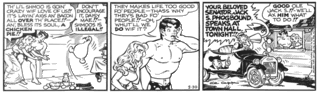
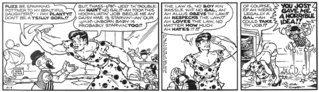
Like a giant modern Prometheus in its boyhood growing into adolescence, human productive potential is right now being forced to contain its bulging body in the rigid childhood suit of armour provided for it by its wicked capitalist guardian. The spectacle is ridiculous - Li'l Abneresque (Li'l Abner) - shmoos are popping up everywhere ("shmoos is bad fo people" ), and yet "we" have to exterminate them for the "good of society" ("ah loves the law").
Marx wrote well over a century ago that finance capital (as a fully developed bank and credit system):
So a world controlled by a fully developed banking and credit system (imperialism) is ready for the next "generation" of human society, socialism. Imperialism is capitalism pregnant with socialism, as Marx shows here and Lenin and Trotsky reiterated.
The problem is really more about politics and power than about economics - how can the majority of human beings, locked up as they are in their individual imperialist states, wrest control of the world economy and world power structure(s) from their current pro-monopoly, pro-banking-and-credit, pro-"capitalist" governors?
DENVER -- State lawmakers laid out an ambitious plan this week to fund renewable energy development through a new Clean Energy Development Authority with the power to issue bonds.and:
"We'd love to see this become the Silicon Valley of renewable energy,"Colorado needs to move fast if it wants to be a player.[...]
Sen. Ken Kester, R-Las Animas, said the plan could provide virtually unlimited funds for renewable energy projects. The tax-free bonds could be backed by the state if the Legislature and voters approve. The authority could also issue bonds without state backing.
"Some of those transmission lines cost $1 million a mile," Kester said.
Kester said Texas, Wyoming and New Mexico are already ahead of Colorado in the race to build a new energy economy.
James Tarpey, a member of the Wyoming Infrastructure Authority Board, said his board has the authority to fund projects that cost $1 billion or more.[...]
Gardner said there would be no limit on the amount of bonds the authority could issue.
"The capital infusion as a result of this bill is unlimited," he said.
Sen. Chris Romer, D-Denver, said Colorado has the renewable energy assets and can't afford to squander them.
"We are clearly the Saudi Arabia of wind, solar and carbon assets," he said.[...]
Colorado lays out ambitious energy plan
BP Solar is a part of BP Alternative Energy, which over the next 10 years aims to invest $8 billion globally in solar, wind, hydrogen and natural gas power technology. BP’s investments in India include Castrol India and Tata BP Solar. Speaking to ET, Lee Edwards, president & CEO, BP Solar said,
“The JV with Tata Power has huge potential, therefore, we could look at more opportunities in other alternative energy sources. Tata BP Solar has been witnessing around 40% growth in India over the last two years.” The company has recorded revenue of Rs 650 crore this fiscal. Currently, 60% of the solar cell produced in Bangalore is exported to Europe.
Tata BP Solar has added 36mw solar photovoltaic production line capacity with an investment of $22 million to the existing 16 mw taking the total cell manufacturing capacity to 52 mw per annum. The board has also approved of $100 million investment for the next phase of expansion, which will see an additional 128 mw of cell manufacturing capacity to be added during 2007-08, taking the total capacity to 180 mw. This is a part of the planned 300 mw cell manufacturing plant.
The big deal here is two-fold.
First US politicians talking about the new energy economy in the terms of a race: "Kester said Texas, Wyoming and New Mexico are already ahead of Colorado in the race to build a new energy economy." And the talk of "unlimited funds", "virtually unlimited capital infusions", "the Silicion Valley of renewable energy", "move fast if it wants to become a player" - the competitive spirit is being cheer-leaded here with great vigour. "You're behind, get moving!" and the pom-poms and short skirts of capital are undulating and shimmying, arousing the sluggards to perform.
Texas and California have been jousting for months now about who's leading the wind generation league. So now solar is coming in too, and Colorado is piling into the ruck. As is Arizona in other news. This indicates that not only will all pessimistic forecasts for the growth of renewable energy in the next decade or so be trampled in the rush and forgotten, but that big oil and nuclear will have to shift their active capital and effort fast to stay in the game.
And blow me down if the Indian news doesn't underline this very thing. Everyone knows BP is big oil, but TATA INDUSTRIES is not at all well known. It is basically Manufacturing India, Inc. So with Big Oil and India Inc starting to move (and the figures aren't quite peanuts), the game is going to be sweatier for the US would-be players to thrust their way into than they might imagine.
Add to these very empirical signs the new emphasis on energy conservation in heating and lighting, moves to bio-fuels (ethanol, bio-diesel, wood pellets), and the still a bit speculative and research-based work on geo-thermal (heat pumps), tidal and wave energy, not to mention the revamped ideas about harvesting solar energy from space, and there's something spectacular under way.
Simply put, even under the warped and repressive social relations of capitalism (with its undemocratic and conflict-ridden monopoly ownership of resources, production facilities and what we might call Big Knowledge - the kind that gets patented and copyrighted out of the public domain and hidden away in corporate R&D or narrow specialist publications) the forces of production (technology and the demands of technology in relation to human social needs at this level of technological development) are forcing us into the realm of socialist (non-capitalist, cooperative, internationally coordinated) development.
Like a giant modern Prometheus in its boyhood growing into adolescence, human productive potential is right now being forced to contain its bulging body in the rigid childhood suit of armour provided for it by its wicked capitalist guardian. The spectacle is ridiculous - Li'l Abneresque (Li'l Abner) - shmoos are popping up everywhere ("shmoos is bad fo people" ), and yet "we" have to exterminate them for the "good of society" ("ah loves the law").
Marx wrote well over a century ago that finance capital (as a fully developed bank and credit system):
The banking system, so far as its formal organization and centralization is concerned, is the most artificial and most developed product turned out by the capitalist mode of production, a fact already expressed in 1697 in Some Thoughts of the Interests of England. This accounts for the immense power of an institution such as the Bank of England over commerce and industry, although their actual movements remain completely beyond its province and it is passive toward them. The banking system possesses indeed the form of universal book-keeping and distribution of means of production on a social scale, but solely the form. We have seen that the average profit of the individual capitalist, or of every individual capital, is determined not by the surplus-labour appropriated at first hand by each capital, but by the quantity of total surplus-labour appropriated by the total capital, from which each individual capital receives its dividend only proportional to its aliquot part of the total capital. This social character of capital is first promoted and wholly realized through the full development of the credit and banking system. On the other hand this goes farther. It places all the available and even potential capital of society that is not already actively employed at the disposal of the industrial and commercial capitalists so that neither the lenders nor users of this capital are its real owners or producers. It thus does away with the private character of capital and thus contains in itself, but only in itself, the abolition of capital itself. By means of the banking system the distribution of capital as a special business, a social function, is taken out of the hands of the private capitalists and usurers. But at the same time, banking and credit thus become the most potent means of driving capitalist production beyond its own limits, and one of the most effective vehicles of crises and swindle.
Capital III Part V (Division of Profit) Chapter 36 (Precapitalist relationships) (a few pages before the end of the chapter)
So a world controlled by a fully developed banking and credit system (imperialism) is ready for the next "generation" of human society, socialism. Imperialism is capitalism pregnant with socialism, as Marx shows here and Lenin and Trotsky reiterated.
The problem is really more about politics and power than about economics - how can the majority of human beings, locked up as they are in their individual imperialist states, wrest control of the world economy and world power structure(s) from their current pro-monopoly, pro-banking-and-credit, pro-"capitalist" governors?
Subscribe to:
Posts (Atom)