Mail thread on the continuing subordination of women even in "developed" industrial societies.
https://mail.google.com/mail/?zx=7as9n55y8u51&shva=1#inbox/1248ad610636d2e9
Choppa Morph wrote:
> But to say workers seldom have 74 hour weeks for starvation wages
> is sheer nonsense. Unless you're thinking of relatively privileged
> and well-organized workers in industrialized countries.
If we are talking about the proletariat, aren't we by definition
talking of industry?
Nope - the proletariat (according to Marx) is made up of who own nothing to sell but their labour-power - no other "productive" assets, like computers. This definition makes a big difference. The industrial proletariat is, obviously, sells its labour-power in industry. Nowadays in imperialist countries ("our" advanced industrial nations) the public sector and services are mostly industrialized - the workers there are wage-earners involved in producing the commodity labour-power, ie us human beings.
But yes, industrial workers in developing countries have relatively
bad conditions. But as I mentioned before, I was referring to France
& the US - where workers do not have starvation wages. Very different from conditions in 1848 London or Paris - which were worse than conditions in China today.
Not by much. And industrial workers in developed countries are still risking life and limb and internal organs due to the pace of work required and the lousy conditions and machinery not adapted to human bodies. Not in the "posh" industries featured in "aren't we great" Readers Digest or airline glossies, but in normal industries manufacturing paint or plastics or the like. Not to mention the service industries.
Read Barbara Ehrenreich's illuminating book "Nickel and Dimed" on this.
> A lot of "rich" countries also have workers forced to work two jobs
> to survive.
Bullshit. "Survive" is not a meaningless term.
Again - read Ehrenreich - she's talking about basics. Food and shelter. Why the hell have soup kitchens sprung up again, or homeless people become a problem once more?
They "need" two jobs to have big homes, cars, electronic toys, etc
etc - environment-destroying "things" they are "forced" to buy to
serve big capital. If they didn't enslave themselves to consumer
society, "they" could work 20 hours a week and do much better than
"survive". The average Westerner spends more on each car they own
each year than the world-wide average total annual income. And yet
cars are planet-destroying luxuries. Most French families spend more on cell-phones than the annual incomes in poor countries. No one needs a cell phone. Survive?
This is for the "lucky" ones. Two income households able to put themselves in debt ("credit worthy"). I wasn't talking about them. In our society(ies) you now need two incomes to sustain a "normal" standard of living. This normal standard of living DIFFERS FROM COUNTRY TO COUNTRY - that's very important to bear in mind. Never mind if this standard includes the kind of crap you mention - a daily paper, for those who can still afford it, can be sewage like the Daily Mail or filtered sewage like the Guardian. We're more often talking about "social survival" (keeping above the contempt level) than actual physical survival. If you look at the worst cases of "social" death in "developed" (excuse me while I vomit) countries, the list is still endless. The street-sleepers of Paris (under bridges, on underground ventilation grids) are a good (!) example. All kinds of diseases on and inside their bodies, including gangrene and organ failure. Frinstance.
I'm not questioning that the distribution of resources is skewed. But
don't tell me that we have to swallow the television commercials to
know how to "survive".
The TV commercials are a worry, but only cos they reinforce the generally shitty situation of those with nothing to sell but their often unwanted labour-power. Like the rural poor in the US with no access to health care (cf the "health fairs" mentioned in a previous thread), who drink way over the Danger level of sweet fizzy drinks, or smoke, etc. Only the extremely poor, anywhere in the world, are unable to get hold of such destructive poisons - tobacco and alcohol or narcotics.
This relates to the breast-feeding part of the thread cos of the efforts by very big capitalist groups to replace healthy reproductive behaviour (like breast-feeding) with artificial and often harmful commercially profitable behaviour (bottle-feeding using milk substitutes).
C
26 October 2009


New approach
I write a lot by way of comments in other blogs, mail lists, chats, news media etc. Like a mosaic, a bigger clearer picture can emerge from lots of small, apparently separate pieces. And even if it doesn't for every reader, at least a lot of the pieces are colourful and have some depth (or let's say the glass is sometimes thicker ;-) ), making for a kaleidoscope rather than a mosaic. When I was a kid I loved the kaleidoscopes we made at home on the kitchen table.
So I'm mainly going to post my comments out of their immediate context. You can decide if the larger context/perspective gives a clear enough ground and frame for my scattered fragments, these "disiecta membra".
I'll indicate the original location of each entry so you can follow the whole discussion leading to my response, if you want to.
13 February 2009
Revolutionary situations in Near East
Soumaya Ghannoushi writes:
There are echoes of pre-revolutionary Iran in the wider Middle East |
There are echoes of pre-revolutionary Iran in the wider Middle East |

Comments (96)
Soumaya GhannoushiThe Guardian, Friday 13 February
Ripe for revolution
A blinkered west has created conditions in the Middle East that mirror those of late 1970s Iran Thirty years ago the world awoke to a great volcanic eruption in Iran that transformed the country's face and sent tremors across the globe. A mass movement of popular protest had succeeded in doing what few had thought possible. The Shah's heavily fortified regime was no more - a mere chapter in the country's long past.
For all the religious euphoria that has marked the revolution, its root causes are in reality more sociopolitical than theological. After all, theology cannot create revolution if its conditions are not seething in society's gut and within its political forces. The vast wells of popular anger that erupted at the end of the 1970s were fed by grievances that had been building for years. At the forefront of these was the corruption and despotism of the Shah and his regime; the widening circle of sociocultural marginalisation, fuelled by pseudo-modernisation; and the regime's acquiescence to foreign interventions, particularly from the US.
There is much about this pre-revolutionary Iranian scene that would appear familiar to the observer of the wider Middle East today. While the region's modern history has been mired in a string of crises associated with a fragile post-colonial state, its ills have been further aggravated by the erosion of legitimacy that has accompanied the last few decades. Its first source - national liberation - faded with the departure of the independence generation, and the rise to power of a new breed of colourless technocrats and generals.
And as the promises of development and progress vanished into the smoke of the shanty towns, the Arab state lost its last refuge from its citizens. Stripped of all cover, it degenerated into a terrifying oppression machine. The more depleted its legitimacy, the greater it relied on the police, internal intelligence apparatuses, and on the support of foreign patrons - much like the Shah. Most Arab regimes would not survive without the perpetual use of violence against their citizens and opponents - aided and abetted by their "friends" and allies.
Egypt may represent the clearest manifestation of this state of affairs. For the last decade, its 80-year-old president has been preoccupied with ensuring the accession of his son, Gamal, to the throne of the republic. In the meantime, his country, the most populous in the Arab world, sinks deeper into degeneracy, with receding regional influence, rampant corruption, and millions teetering on the verge of starvation.
What we have before us is a deadly recipe for explosion. By the 1990s, with the collapse of communism and Bush Sr's attack on Iraq, most Arab regimes had reached their sell-by date. Thanks to their "business as usual" Euro-American allies, their expired lives were extended. But one cannot see how they can escape mortality much longer, amid a sea of crises and surging popular anger.
Of course, this is not to say that the Iranian scenario will be replicated in Egypt - or other Arab countries - or that another Khomeini will soon emerge. History does not repeat itself. What is doubtless though is that many components of the Iranian dynamite are today raging beneath the surface of imposed "stability", especially as new sociopolitical forces are entering the stage on the ruins of the discredited official elite.
Four months before the Shah was forced to flee, the CIA issued a report describing his regime as stable. The shah, it predicted, "is expected to remain actively in power over the next ten years". Things haven't changed much since. The same state of wilful oblivion is still in play. Blinded by short-term interests, western governments insist on seeing things in the region as they want, not as they are. In truth, they are the real makers of revolution in the Middle East.
• Soumaya Ghannoushi's book on the directions of political Islam will be published later this year
*********************
Choppam responds:
Soumaya Ghannoushi: There are echoes of pre-revolutionary Iran in the wider Middle East
Soumaya Ghannoushi: There are echoes of pre-revolutionary Iran in the wider Middle East
Good starter for discussion, and basically correct.
I would like to see more detail on the prerevolutionary vs revolutionary situations today though.
In relation to 1979 conditions are far more fragile throughout the Middle-East. In the pressure-cookers of Egypt and Pakistan in particular.
What happened in Iran was the combined revolt of the urban left and workers, whose main political leadership was Tudeh (Euro-Communists, neo-Stalinists) who didn't go for power, and the rural poor, led by the mullahs, who did go for power. The rural poor fell to the mullahs cos the Tudeh ignored them (cf the progressive urban regime in Afghanistan under USSR protection, which also ignored the rural poor). The Tudeh, given revolutionary, class-independent leadership (not fawning on the bourgeoisie with rotten Popular Front ideas, handed the revolution to the Mullahs by default, and paid the price.
A similar process is likely in Pakistan today. The US is pursuing a divide and rule policy to split the country into mutually hostile regions, and is violating Pakistani airspace every day - in fact such violation was one of O'Bamas first orders. Pakistan is not just seething (as is the case in Egypt) but is about to boil over. Since the voluble left is even blinder and thicker than it was in Iran, power will once more pass to fundamentalist extremists by default. End of story in Afghanistan for the imperialists, and a huge boost to Iran to stand up to the US once more. A boost for independence forces in Iraq too. And a model for the enraged masses in Egypt and the oppressed in Saudi-Arabia. God knows what the effects would be on India or Israel or Turkey - just to take a few states in the immediate vicinity of such a development.
The current lick-spittle pro-imperialist regimes in Egypt, Pakistan and Saudi would be missed as little as the Shah in Iran in 1980 or the Tsar in Russia back in 1918. Drowned without trace in the cesspool of history.
And the US (along with its lickspittle co-imperialists) would suddenly find it had lost an arm and a leg in one of its most important and resource-rich bridge-heads/enclaves in the world. Roughly comparable to the loss of the Subcontinent by British imperialism after WW2.
These are huge geo-political changes waiting to happen, and the result will not depend on US military might but on the internal struggles between progressive urban working-class forces (all the others having sold out to imperialism) and reactionary rural "religious" forces, and which of them is hungriest for power. The internal struggles that will break out, that is, when the immediate joint objective of removing the alien oppressors has been achieved.
Just sit back and watch - it'll all be on TV, and now you know what's gonna happen and how to interpret the nonsense that our pundits will be spouting when it does happen.
10 February 2009
Throw everything at it!
http://gristmill.grist.org/story/2009/2/9/151024/2055
Small is ugly if it means we keep burning coal
Gar writes: "We have start deploying everything we know how to do at a reasonable cost, which includes stuff that is more expensive (not including social costs) than fossil fuel".
Choppa responds:
This is perfectly true, but definitely needs spelling out for the nuclear, gas and coal lobbies and their deluded followers. And the clearer it is spelt out, the clearer it also becomes for the rest of us, and the angrier we will get at the suicidal short-sightedness of our own dinosaurs.
That's it Chop
I'm thinking of the political and financial blockage erected by the status quo industrial lobbyists and those "politicians they keep in their pockets" (to paraphrase "The Godfather") thusly: It has already lost, but we don't realize it yet. As lovins says the big investment money has abandoned coal and nuclear power already, will oil be next?
Small is ugly if it means we keep burning coal
Big is beautiful if it breaks our dead-dinosaur addiction
Posted by Gar Lipow (Guest Contributor) at 7:59 AM on 10 Feb 2009
Gar writes: "We have start deploying everything we know how to do at a reasonable cost, which includes stuff that is more expensive (not including social costs) than fossil fuel".
Choppa responds:
This is perfectly true, but definitely needs spelling out for the nuclear, gas and coal lobbies and their deluded followers. And the clearer it is spelt out, the clearer it also becomes for the rest of us, and the angrier we will get at the suicidal short-sightedness of our own dinosaurs.
Buildings - retrofitted, insulated, covered with thin-film PV and solar water heaters, running heat-exchangers for air and rock, using rooftop greening to provide moisture retention, heat moderation and recreation on-site, and lower built-up area heat extremes. Constructed with energy-use optimizing windows and glass, and using optimal angling for shade in summer and sun in winter - and light conduits to reduce power for lighting.
Water - heat-exchange source; groundwater from different levels for grey water (non-drinking, lawn-watering) use, and clean water; running water providing electricity from river-turbines, as well as more recreational and economic (fish-breeding) water given reduced cooling needs. Seawater providing tidal and wave energy.
Earth - geothermal with its huge resources (volcanic areas); heat exchange (plenty of experience worldwide with small-scale HE, less with just as feasible district or urban scale HE); (speculation: why not try and tap earthquake movements and tension pre-catastrophe?); underground construction for say industrial purposes; crops and greenery for multiple uses.
Wind - windfarms and small-scale highly efficient urban turbines, etc - this is well-enough known.
Sun (water, earth, wind, fire!!) - pull together all we know about - PV, CSP, water-heating; small-scale, large-scale etc, and throw it all in the mix at every geopolitical level.
THEN THINK BIG!!
Gar hits the nail on the head when he mentions HVDC. This High Voltage Direct Current will transform our electricity transport and usage the way Tesla's LVAC project did. Imagine that! Not only could sunrich areas produce energy for many industrial and residential at once - the whole of Southern California, at least, frinstance, plus the cities of Nevada and Arizona - but on a world scale we could harness the solar resources of the Sahara to supply the whole of Europe. This last project is already being studied, and there's a trial HVDC line already being operated in Sweden.
So, if we THROW EVERYTHING AT IT NOW, we'll be well on our way. And every development over the next couple of decades (and as with AC electricity, these will follow thick and fast) will add to the goodness and savings. And if we're lucky, renewable energy will take off with the enthusiasm and diversity and unimagined human empowerment generated by computerizationa and the internet.
Sorry about the length - hard to add to what Gar said without referring to the breadth and depth of areas already working or projected or shown to be feasible.
| Lovins knows best I still like an HVDC super grid following electric rail corridors though. And large wind farms, large wind/wave/ocean current floaring platforms offshore, and large concentrating solar on factories. Will these large renewable systems be necessary when solar cogeneration reaches 70% efficiency, batteries reach 10 minute charge and 1/4 the energy density of liquid fuel, and superconducting electromagnetic energy storage goes into mass production? Nope. Keep the HVDC super grid and the factory CSP, and recycle the wind and wave machines when that happens. Meanwhile all sorts of people in single family homes, living on farms, and communities large and small who don't mind timing their power use and putting up with ocasional emergency backup power systems can go renewable immediately if not sooner. |
I'm thinking of the political and financial blockage erected by the status quo industrial lobbyists and those "politicians they keep in their pockets" (to paraphrase "The Godfather") thusly: It has already lost, but we don't realize it yet. As lovins says the big investment money has abandoned coal and nuclear power already, will oil be next?
Oil is showing signs of that effect, investors are afraid to put up 100s of billoins for new oil exploration, offshore drilling, and refining unless/until prices rise and show some sort of long term trend. Those billions won't produce profits otherwise.
Wind shows profits immediately.
Here's where we are really at: over 50% of us want to go green. Under 10% of our energy use is renewable and conservation and efficiency combined barely have the combined figure reaching 10% of our energy use.
Over 50% of us are willing to sacrifice some convenience and adjust our lifestyles to do it. We would be willing to give up always on 100% centralized grid power and gas guzzlers, and go for smart grid power timing and ocasional emergency backup power and plugin hybrids that make us actually pay attention and plugin our cars.
So we have 50% of us demanding change and willing to sacrifice for it, and less than 10% market pentration of green energy conversion. There is huge growth potential, only capital for mass production is missing. Government stimulation could set a fire under this commercial wave.
As it rolls out why bother with the other 50%? Let them laugh and deride and resist, who cares? We will eventually be selling them their daily dose of kwhs.
It will take years to get to 50% so let's just enjoy it, invest early in solar cogeneration on our roofs, and ground source heating/cooling, and plugin hybrids and sit back and collect our gains.
We have the numbers to demand that we be allowed to sell our power over the grid and improve grid design to accept this green energy re-evolution. mosr of our detractors, the drill baby drillers, will join in around 2020, with the final 10% cursing us until the day they go to their rewards.
The bottomline is that we have won the political battle in terms of public opinion, but the public does not realize the technology is already here, waiting for capital for mass production. We have to wake them up by example, by highlighting successful renewable smart grid and conservation efforts.
http://amazngdrx.blogharbor.com/blog John Schneider, Northern Wisconsin
9 February 2009
Guardian - down with corporative tax avoidance
Really stupid article, as are all these articles attacking symptoms of capitalist rot and not causes.
What we need is a workers state, run by the workers for the workers, with comprehensive land reform (!), ridding the country of the huge and parasitical land tax, with comprehensive industrial reform ridding the country of a huge and parasitical production tax, and comprehensive financial reform ridding the country of a huge and parasitical interest tax. If all the product from land, industry and banking went to the people and its democratic institutions instead of an infinitesimal group of greedy and irresponsible profiteers, we'd discover just how rich a country we're living in. But right now none of it's ours, it's all theirs.
Of course these reforms need to be international, even though they'd survive even in individual countries for a while, as the USSR did for 80 years.
And anyone notice how totally useless all the established economic theories and experts are when it comes to the crunch? All that's left to take capitalism through to the next big war is a period of Keynesian concessions to the workers to allow capital to lick its wounds, regroup and then try once again to decapitate the hydra- headed working class.
What a stinking, utopian project!
27 December 2007
Benazir Bhutto assassinated
Time to get back to the blog again, hopefully it'll be a bit less compact this time.
As far as personalities are concerned I've often used Benazir Bhutto as an example for women i gender-oppressive societies. Marry someone with money who doesn't mind what you do as long as the public ceremonials are observed, and do as you wish out of the public eye.
But the personal aspect isn't very relevant in relation to the assassination.
It's not primarily about personalities, but about policies. There are enormous pressures being exerted on Pakistan by imperialism, and by the populist opposition to imperialism currently being channelled by islamism.
Bhutto's policy was to lead the regime best able to manage imperialism's interests in the country while siphoning off some of the riches for her own and for her more powerful supporters, with crumbs from the table for her mass base among the petty bourgeoisie.
The populist opposition is fuelled by democratic demands for national and cultural self-respect, but the distorted ideological representation this finds in islamism will lead up a blind alley. The weaknesses of individual terror tactics are symptomatic in this respect - it destroys your most enthusiastic supporters, and generates heavily repressive countermeasures by the state.
At least islamist populism stands in opposition to the West and its stranglers... so far so good... but since it also stands in opposition to the need of the mass of Pakistanis for food shelter health education productive work and a say in their own lives, it will be as contradictory as the regime in Iran. And far from attracting the solidarity of the mass of working people in the West, it tends to alienate them and provide fuel for the misleading demagoguery of Western politicians.
Only a revolutionary (ie anti-capitalist) socialist mass movement can stop the rot and end the bloodshed and despair. Obviously in a socialist union with the rest of the sub-continent - India, Sri Lanka, Bangladesh and Afghanistan to start with.
For the moment we can note that Eppur si muove - nevertheless, it moves, as Galileo noted of the earth around the sun. History, and beneath its bloody surface, the class struggle, is moving, and after the tensions piled up by the collapse of Stalinism in the USSR, the explosiveness of its movements should surprise no one.
The End of History - my arse!
2 May 2007
So *why* do men hate women?
Guardian Unlimited | Comment is free | A slur and an outrageA slur and an outrage
The reporter who blew open Watergate is part of a misogynist conspiracy against Hillary Clinton
Zoe Williams Wednesday May 2, 2007 The Guardian
All you ever read about Hillary Clinton is how the American electorate hates her, and yet the only reason you're reading about her in the first place is that she is, in effect, 50% of the candidacy for leadership of the Democratic party. Somebody, surely, must like her. It can't just be the internet. Is the net even allowed to vote?
Carl Bernstein is dishing the dirt in his forthcoming unauthorised biography, entitled A Woman in Charge: The Life of Hillary Rodham Clinton. Bernstein is now known as "the one played by Dustin Hoffman" in the Watergate film. He is a seminal investigative journalist, and claims to have the unexpurgated truth, culled from 200 sources - one of which, wince-inducingly, is Clinton's closest confidante, Diane Blair. Or rather not the woman herself; she (and now you can wince) died of lung cancer seven years ago. Bernstein has filleted her papers and personal effects, which are being sorted for the University of Arkansas library. He stops short of calling Clinton a liar, apparently, but suggests that she played fast and loose with the truth. Well come on then, how would the truth look if she'd played slower and tighter?
The gobbet that's meant to stir us up and keep us going until publication next month is this: contrary to what she's said, she did know about Bill and his affair with Gennifer Flowers. Or at least, she probably knew. This is according to an uncredited writer who has followed her career closely. "She always knew about her. Anyone who has approached the subject of Hillary Clinton with a clear eye will run across many examples of stories that are not true."
It's a tricky one, isn't it? Maybe she did know, but there might be a question mark over how she knew - was it actual information, or a hunch? When exactly should she have announced that she knew, in order to keep her veracity slate clean in the eyes of the voting public? When she'd got hold of some DNA evidence, or just when he came home with a naughty look on his face? Never mind that this is his transgression, not hers. Never mind that he paid his debt for his lively undercrackers some time ago, as I think even the most stalwart conservative would agree. How can this possibly be a relevant test of her, as a person or as a politician?
This is so far beyond the old "does it matter what they do in the bedroom?" debate. It's outrageous even to suggest that her husband's sex life is salient to her career in the first place, let alone that she should be held accountable for it. The whole book, ranging across "everything" from Clinton's "complex relationship with her disciplinarian father" to "her courtship with Bill Clinton and the amazing dynamic of their marriage, during the most trying of circumstances", is a slur on Hillary Clinton, refracting her through the prism of the men around her to a nexus of feminine roles: daughter, wife, blah.
The greatest outrage is that the next accusation will be that she isn't a "heavyweight". Misogynist opinion sees no contradiction in reducing any given woman to a series of soap opera and/or biological roles - and then, using this as "evidence", levelling at her the charge that she isn't serious-minded!
The same has happened to Ségolène Royal, the socialist contender for the French presidency, who has found even members of her own party incapable of comprehending how someone can both be a mother and understand foreign policy. Oh, that we had time to caper through the various German responses to Angela Merkel's childlessness.
In the UK, our tabloids are still capable of this sort of thing, but in Westminster, in soi-disant quality journalism and publishing, it would be laughed off the page. At the risk of unseemly nationalism, it's worth remembering how far we've come.
********************************
Choppa's response:
So, *why* do so many men fear women?
For the same reason many US-icans fear socialists and communists.
US citizens are so afraid of their peers - of each other -- and you can see this in any piece of US mass culture, which is full of organized bullying and brutality (Them) against weak and trembling individuals with a desirable goody to be stolen (Me) -- that they can hardly conceive of the Evil that must be inherent in Double Thems (Emperor Ming, Lex Luthor, the Joker, Saddam Hussein, Huns, Nips, Bogey de Jour).
Men likewise are so afraid of each other, so terrified, so browbeaten, so cowardly, so corrupt, so squishily yellowy-brown, that the Alien Other, the Double Them confronting ManHood, Woman, must be of an Evil so inconceivable that their balls clench and they shrivel up in the face of it (la Fica Dentata).
And the culture of fear is nurtured by a society of alienation and terror. Change society from Dog eats Dog to woMan helps woMan, live and let live instead of kill or be killed, and you drain the cesspit of fear we all splash around in.
Voilà.
19 April 2007
Utopian bureaucracy for fat cats vs human life for us all
An article in the Register deals with the mingling of business and pleasure at work. I think it raises some interesting issues about where society in general is heading.
It seems totally unaware of this, of course, focusing instead on the apparently intractable problem of unravelling this Gordian knot and isolating private pleasure from its presumed opposite business (ie public pain??). The problem in fact is the business side, and particularly ownership and power over our work.
Remove private ownership and power, and the whole system falls nicely into order, with everyone owning everything and deciding together how to share it and (re)produce it. So let's have an end to the private appropriation of social wealth, to the private ownership of social production, and try social ownership of social production, the social appropriation of social wealth, instead.
First the article, then my comment.
The politics of email in the workplace
Mixing business with pleasure
Published Thursday 19th April 2007 10:13 GMTIt's springtime in Washington, D.C. The cherry blossoms have bloomed, the tourists descended, and on both sides of Pennsylvania Avenue a new "scandal" is erupting.
In the Watergate era, there was the controversy about Rosemary Woods and the 18 ½ minute "gap" - a missing portion of a taped conversation of June 20, 1972. Now in connection with "US Attorney-gate" we have a new controversy. The alleged "destruction" of electronic mail sent by employees of the White House through email servers used by the Republican National Committee. The matter raises more important issues for government agencies, companies, ISPs and others. Do I really have an email retention policy, and what emails do these policies apply to?
The US attorney controversy
The immediate issue arises out of an investigation by Democrats on the United States Senate Judiciary Committee into allegations that certain federal prosecutors were fired for improper political purposes. The US Department of Justice asserts that the firings were for perfectly appropriate "performance" reasons and that these prosecutors serve at the pleasure of the President and can be fired for virtually any reason.
The email controversy arose when it was discovered that White House employees may have sent email communications about the US Attorney matter through US government computers or computer systems using email systems operated by the Republican National Committee (RNC.) Unlike most governmental emails, which as I will show have to be retained, there is generally no legal requirement that emails of the RNC be maintained. Thus, at least according to press reports, the emails in the RNC systems were "deleted" after 30 days. Or were they?Personal vs non-personal email
The issues surrounding the controversy are not limited to the United States government. Every company that maintains a mail system has the problem of what to retain, and how to retain it. In addition to a "corporate" email system, companies may also provide employees with access to personal email. This may be through a separate exchange server, but more frequently, companies may allow employees to access their personal email through some form of webmail, either by POP3 or IMAP protocols. Most email systems allow access to email over the web, including AOL, Google's GMail, MSN, and its Hotmail service, Comcast, etc. While many companies expressly prohibit and indeed block access to personal email through their servers, there are actually legal reasons to permit such access.
Corporate or government email, coming as it does from "whitehouse.gov" or "company.com" carries with it an imprimatur of authority. It can be likened to a corporate letterhead or official government stationary. Yet people use such email for much more casual conversations then they would for a formal corporate letter. Nobody would consider whipping out company stationary to write a letter to their doctor or send a quick note to the girl scout troop leader. But an email - no problem. As a result, corporations and government agencies end up sending "official" email about all kinds of matters which do not relate in any way to official business. Indeed, it becomes difficult for recipients of email to effectively determine which communications are intended to bind the company, and which ones aren't - what the law calls "apparent authority".
Companies can deal with this problem in several ways. First, they can impose an outright ban on any kind of personal use of email. A quick note to the little league coach that Bobby is going to be late because mom has to work late is a policy violation which may result in disciplinary action.
Would such a policy be effective, workable, and enforceable? In most cases, probably not - at least not without a good deal of technology deployed around it, including "white lists" and content filters. One problem with this approach is that it is generally implemented inconsistently, and this can lead to legal problems. For example, a recent case involved a Virginia newspaper that prohibited personal use of its email system, but apparently only enforced this policy when employees used the email system for union organising activity lead to legal problems for the paper.
In that case (pdf), decided March 15, 2007, the court found that the uneven enforcement of the "no personal use" policy meant that the company could not select union activities for enforcement. The lesson is: if you are going to prohibit personal use of email, you'd better prohibit it entirely.
(and so on...)
******************************************
Choppa's comment:
Although the piece appears to encourage clearer demarcation between public and private affairs, in fact it points to where human society is heading. The arguments for separation are all based on the society we live in now - rotting capitalism, swollen to bursting with greed and gore, but grotesquely bound here and there with useless but painful red tape. But the behaviour of the actual human beings living their lives as best they can in this inhuman environment is heading the opposite way altogether. Work as part of life, and life as part of work.
In terms of who produces the stuff we use, everything belongs to everyone, as so many parts of society are involved in the production of both the tiniest everyday objects and the hugest international infrastructure projects. We could call this the forces of production. In terms of who owns the stuff we use, well, nothing belongs to everyone and everything belongs to the billionaires. Lets call this the relations of production.
Guess what? The forces of production and the relations of production are in contradiction. Tearing each other to pieces in real but invisible conflicts all around us.
Judge for yourself whether the forces or the relations of production are more human. Judge their relative strengths, now and historically over the centuries. Which will prevail??
Hmmm...
18 April 2007
Massacres in Virginia - and Iraq. An anarchist's reaction
CounterPunch presents:
*****************************
Choppa responds (to Stu who forwarded the piece to him):
Thanks!
Good stuff - but...
No class perspective. Democratic illusions up to here... ¨¨¨¨¨
He sees what power can do (not blind) but he doesn't see its material basis. Anarchist lack of understanding and perception of the levers of social reproduction and social change. Anarchist worship of and paralysis before the Big Gun. Like a rabbit mesmerized by a snake or a deer in headlights, he can't even call for a general strike by workers in the arms industry! He doesn't even call for a vote on any policy!!
What it boils down to is blaming the "ordinary American" for the political system and for supporting its priorities. No mention of the machinery to keep ordinary people in check. Guns in America are in the hands of the antisocial - baddies. Not a word about the cops, the scabs, the spies, the military at home. Not a word about history and the constant tug of WAR between workers and capitalists, both national and international. Not a word about the USSR (ooooold story). Not a word about US strategy against the Soviet bloc. Not even a word about Cuba or Venezuela.
In other words, too much distortion, too much garish contrast. A news item as impressionistic in its way as the Fox reports it mirrors from the other side.
Still better this than nothing!
But still - what a featureless landscape he paints between the juggernaut Bush and the berserk loner at VA Tech. An America populated by zombies and hoods.
A Momentary Glimpse into Daily Life in Iraq
Massacre at Va Tech
By SHERWOOD ROSS
At the memorial ceremony for those slain at Virginia Tech, President Bush said today he did not know what the victims had done to deserve their fate. How this nation wept as one when thirty innocent Americans perished and twenty more were wounded! There is almost nothing else on the television news but this tragedy --- not even news from the ongoing slaughter from the war in Iraq.
Here we have the sorry spectacle of the man in the White House who made the war on Iraq, where a disaster comparable to the Virginia Tech massacre occurs four or five times a day every day, leading the nation in prayer! Yet when does this man go on television to ask the American people to pray for the hundreds of thousands of Iraqis who have been murdered in the illegal war he launched? And just as the students and teachers who perished at the hands of a crazed killer on the Virginia Tech campus had done nothing to deserve their fate, neither have the people of Iraq committed any crime to endure the unendurable they are suffering at the hands of a president who professed to be "horrified" at the events on a peaceful campus. If a South Korean student is regarded as a berserk killer for murdering thirty people what is President Bush, whose invasion to control oil-rich Iraq has cost nearly three quarters of a million lives, created four million refugees, and plunged the Middle East into turmoil?
The American people, including the families of the murdered Virginia Tech innocents, have collective blood-guilt on their hands. I have not gone to jail to protest the war machine, so I am no better than they and probably a good deal worse because I have given the issue some thought. How many of those parents in the audience hearing the President's words had elected to Congress men and women who voted for lax laws on gun ownership? How many of those parents in the audience had also voted for legislators who backed the president's illegal invasion of Iraq? Are we, as a nation, too obtuse to grasp the connection between our "gun culture" policy at home and our militarist policy abroad that murders and mutilates human beings at every turn? Practically any one in America can buy a gun, and abroad, any dictator in the world can buy weapons made in America because we just happen to be the world's biggest arms peddler.
What kind of a society has America become? Why do we have two-million men in our prisons? Why, in some cities, is every second or third male either in prison or out on parole? Why is the murder rate soaring in so many cities? Why is there on average more than one killing a day in a city like Philadelphia? Why are our own terrorists murdering 30,000 Americans each year and injuring tens of thousands more with rapid-fire handguns of the sort used on the Virginia Tech campus? Do we realize, speaking of terrorists, that ten times as many Americans are being killed by Americans each year as all our troops in Iraq? Osama bin Laden is everywhere in America. He has a thousand faces. They are the faces of our own dispossessed, our own poverty-stricken, our own unemployed, our own underclass, our own idolized gangsters , our own youth who grew up in front of television sets that ooze violence and blood.
Who is responsible for the killings in Iraq except the same now bereaved parents of the murdered students at Virginia Tech? It's not that some of them voted to elect George Bush. Anyone can be deceived, particularly by a notorious liar. But when the president broke the law and invaded Iraq, violating the UN Charter, how many of them protested? Today they are upset that a young, crazed gunman has ran amok on the campus of a peaceful university, but where were they when President Bush defied the United Nations and ran amok in Iraq? Do they know, as Amnesty International reported on the same day as the Virginia Tech murders, the Middle East "is on the verge of a massive humanitarian crisis" because three-million Iraqis have been "forcibly displaced" by the war the grief-stricken Mr. Bush began? Who do the American people think made this humanitarian crisis in the Middle East if not the American people?
The same parents who weep for their children might consider that they and their neighbors are also spending a half trillion dollars a year so that the Pentagon, just over the horizon from Virginia Tech, can wage a war that is snuffing out the lives of children of other parents just like their own. Thousands of Virginians work for the military-industrial complex. They work for the Pentagon. They work for defense contractors. They work for the Central Intelligence Agency. They are in the business of killing directly or indirectly, yet how many of them are haunted by the consequences of their "jobs" in their dreams at night?
All across America, people who attend church and regard themselves as "good" people, such as the bereaved at Virginia Tech, are working in the plants that make atomic bombs and warplanes and napalm and cluster bombs and are creating new, demonical designs of germ warfare and space-based weapons so vile and horrible they defy description.
America as a nation has become an organized nightmare. Yesterday, the nation woke up to the pain of the kind of killing it has been inflicting widely around the world since its fleets of bombers roared out to destroy Dresden, since it leveled Hiroshima and Nagasaki, since it laid waste to Vietnam, since it overthrew Chile, and now since it has invaded two Middle Eastern nations in its thirst for oil. Yes, weep for the innocent victims of Virginia Tech, who only wanted to study and live in peace. But weep also, America, for the people of Iraq! If President Bush cared as much for them as he cares for his own, he would have to hold four news conferences a day. He would never stop grieving.
Sherwood Ross is a Miami-based columnist. For comments or to arrange for speaking engagements contact him at sherwoodr1@yahoo.com.
*****************************
Choppa responds (to Stu who forwarded the piece to him):
Thanks!
Good stuff - but...
No class perspective. Democratic illusions up to here... ¨¨¨¨¨
He sees what power can do (not blind) but he doesn't see its material basis. Anarchist lack of understanding and perception of the levers of social reproduction and social change. Anarchist worship of and paralysis before the Big Gun. Like a rabbit mesmerized by a snake or a deer in headlights, he can't even call for a general strike by workers in the arms industry! He doesn't even call for a vote on any policy!!
What it boils down to is blaming the "ordinary American" for the political system and for supporting its priorities. No mention of the machinery to keep ordinary people in check. Guns in America are in the hands of the antisocial - baddies. Not a word about the cops, the scabs, the spies, the military at home. Not a word about history and the constant tug of WAR between workers and capitalists, both national and international. Not a word about the USSR (ooooold story). Not a word about US strategy against the Soviet bloc. Not even a word about Cuba or Venezuela.
In other words, too much distortion, too much garish contrast. A news item as impressionistic in its way as the Fox reports it mirrors from the other side.
Still better this than nothing!
But still - what a featureless landscape he paints between the juggernaut Bush and the berserk loner at VA Tech. An America populated by zombies and hoods.
10 April 2007
Copyright, copywrong, humanity and piracy
Techdirt: It's Not China's Poor Copyright Laws That Fuel Piracy ThereContributed by Carlo
Tuesday, April 10th, 2007 @ 3:02AM Permalink to this story.It's Not China's Poor Copyright Laws That Fuel Piracy There
from the untapped-demand dept
In one of its roles as proxy for Hollywood movie studios and record labels, the US government continually complains to China that it's not doing enough to stop piracy, and threatens it with the big stick of sanctions or other actions through the World Trade Organization. While these threats are usually just hot air, the US has now formally complained to the WTO, saying that Chinese laws don't live up to WTO commitments in the area of copyright protection and enforcement. But there's a second element to the complaint, which takes issue with China's heavy restrictions on the distribution of foreign content, including DVDs, CDs, books and other products. Where things get a little bit more interesting is that the original article in the Wall Street Journal, and indeed, movie studios and record labels themselves, gloss over the second part of the complaint -- when it illustrates beautifully how backwards big content thinks.
A graph in the article says that China and France are the two nations where the movie industry suffers its biggest losses due to piracy. While the dollar amounts cited are pretty certainly bogus, is it any coincidence that the movie industry sees those two countries as the biggest for piracy when they both feature some of the tightest restrictions on the distribution of foreign content? France is pretty famous for its efforts to keep American content out of its media market, while the Chinese government allows just 20 foreign films to be shown in the country's cinemas each year. It would be reasonable to deduce that it's a lack of legitimately available, attractive products that's driving the demand for pirated goods in these countries, rather than weak enforcement of copyrights. This mimics what goes on in other markets: the content industry fails to provide consumers with attractive products to purchase -- though it's generally because of poor strategy rather than government interference -- so they turn to pirated goods instead. The market for legitimate movie downloads probably provides the best illustration of this scenario. The products offered by legitimate, studio-backed sites are so heavily restricted and overpriced that nobody wants to buy them. The idea that content providers like movie studios don't understand this is reflected in the fact that they aren't pushing the government to attack China's 20-film limit, they just want to make its copyright laws more strict. It's just another indication of how the industry won't compete with free, while it protests that it simply can't. The failure in the market isn't a failure of the government to sufficiently protect copyright holders; it's a failure of those copyright holders to provide products and services that are attractive to consumers.
Reader Comments
A contradiction. by Terri on Apr 10th, 2007 @ 4:33am
This makes no sense. If the copyright holders provide no content that users want, then why do the pirates sell so many bootleg copies of that self-same content?
Re: A contradiction. by MadJo on Apr 10th, 2007 @ 4:39am
my first thought would be price. These bootlegged/"pirated" material is much friendlier priced than the original stuff.
In a way consumers are already voting with their wallets. ;)THis is dumb by Cleveland on Apr 10th, 2007 @ 4:43am
This has got to be the worst written article ever!!
I do agree that the gov't may be keep the film industry down on these countries. Therefore making their citizens turn to bootlegs, but that still is not an vaild reason to steal.Re: A contradiction. by Anonymous Coward on Apr 10th, 2007 @ 4:51am
The copyright holder want to provide the content. As it said in the story China and France drastically restrict the amount of content allowed. The demand is there and the supply isnt. Thats what is driving the piracy.
by [caiocesar] on Apr 10th, 2007 @ 4:53am
I think this is not all true. Se the case of Brazil. It's a wide-open country, specially for foreign content. Even though it has a huge amount of pirated material being bought and sold on the streets of nearly every city.
The real cause might be the high prices that the so called legal content arrives to stores' shelves...It's True by ImaniOU on Apr 10th, 2007 @ 4:53am
As an American who has been living in Taiwan for almost six years now, I can choose to either miss out on really good movies and television programs because although there are some foreign films and TV shows here, the only ones picked up are the ones that are extremely popular or do not rely on understanding the language. If it involves fart jokes, then it makes it. If it involves a lot of dialogue, then the companies here don't want to be bothered translating it so they just don't carry it. The law enforces everything has to be subtitled in Chinese, even Chinese-language media because of the different dialects all over the island. If it weren't for pirated movies and TV shows, I would be missing over half a decade of American pop culture. The quality of programming here sucks and anyone who wants more from entertainment than caricatures and bathroom humor is forced to seek out alternative means for getting it.
Yeah by Wolfger on Apr 10th, 2007 @ 4:57am
That about sums it up. Most people are honest, and would rather pay to get something legitimate. Piracy stems from two sources: unavailability and unaffordability.
***************************************
Choppam responds:
Good article. The US govt is very self-serving in its trade policies, hates international agreements that thwart its greed and selfishness, and censors officials and scholars and scientists who disagree with it whenever it can. And it shills for the corporations like Big Oil, Big Pharma, Big Money and Big ShowBiz. So it tries to put a lid on the reproduction and spread of useful ideas and creative art for the benefit of useless fat cats and uncreative boneheads.
Most people don't realize that the ability to easily and rapidly reproduce ideas and art (eg books, articles, music, shows, movies, prints, photos) is heralding an explosion in interaction and creative development among ALL human beings - that's the whole of humanity, every one of us. Regardless of borders, bureaucrats or bombs.
The reason why the corporations can't compete is that almost everybody hates them, and most people can't afford what they demand. So as soon as the useful and creative things they've stolen from humanity slip through the prison bars they try and put around them, then they find their way home - to humanity.
The oligarchy (rule by the few) and plutocracy (power of the rich) that is fomenting war and destruction today wants to corner every market it can smell out in order to charge exorbitant prices for necessary products. This system wants everybody to act like ignorant selfish money-worshipping brutes like themselves. Fortunately for us (humanity) most people puke at this idea and do what they can to stay human and share their joys and thoughts with each other. You can't make lives and ideas into private property.
Artists and scientists etc need to live. Most people that make up society realize this better than the fat cats and their governments. So let society organize a fair way to do this without the insanity of present-day copyright and patent litigation.
If big stealing (say the looting of Iraq's oil, or the slave contracts big recording companies force on most musicians, or the destruction of our air and water) is sanctioned by law and government, while small stealing is stigmatized and smeared, then the system needs to be turned on its head.
Meanwhile people will do what they have to do to feel themselves as a real part of humanity, with access to the latest and greatest productions of their fellow human beings.
3 April 2007
A utopian view of "academia"
Kenodoxia blogs:
**************************
Choppa responds:
To me, his piece seemed vague and a bit odd.
"Dedication to ideas" in the academic world is nonsense, if understood in the traditional sense. There is some awareness of ideas, and sometimes maybe a readiness to discuss them, but not more. You have to be very lucky to find yourself a congenial group of idea-freaks to pursue trains of thought for days and weeks with.
"Generosity of intellectual spirit" is self-serving flattery of the worst kind, given the warnings earlier in the same breath practically to "advertise" yourself "in a self-obsessed world" and to beware that "academics are mostly keen on acolytes who are mirrors of themselves". In a world of economically driven "publish-or-die" you will only find generosity of spirit among those who no longer care, ie who have nothing to lose or nothing to gain, or are professionally suicidal. And Oswald's world is economically driven, with pay obviously related to "success" measured in publications and status. It is also intensely individualistic and exceptionalist (elitist) - "if most people like your work you can be certain that you have not done anything important", "eschew the latest research fad, and go for iconoclasm".
For a happiness researcher, he is not in the least Epicurean!
And for an economist he has a touchingly naive (or cynically duplicitous) faith that the top-up fees will trickle down (oops, he said "slowly siphon" "vital resources) into [...] higher education". As my daughter would say - "yeah, right..." Resources that vital should be funded up front, like Trident or the nuclear industry. And for me (and the "squealing" trade unions, and most poor people and wage-earners, and damn near everybody in the reviled 60s ("equal pay for unequal talent and effort" indeed, ho yus I remember it so well... :-) )) it's a matter of principle that education should be made open to all appropriately interested youngsters , not just those with "real demand" in daddy's bank account.
Finally, for now, he seems totally unaware that "school" comes from the Greek "skhole" - meaning leisure from work (ie from hard sweaty materially productive work) enabling you to devote your time and energy to the active pursuit of things that interest you, like learning, teaching, ideas, theories, art, music, whatever.
He writes "you will be an obsessive self-employed thinker". "Obsessive" I doubt, "self-employed" is a hoot, although the blend "self-obsessed" might hit the mark?? "Thinker" - well and good - covers a multitude of sins, doesn't it?
I wonder how he would react to my iconoclasm? Somehow I don't think I'd like to find out. For my money, Andrew O is himself the hissing guy in the black helmet.
Silver linings
Andrew Oswald, Professor of Economics at the University of Warwick, whose research interests include measuring and promoting happiness, has written something in the Independent about why academia is a rewarding career to enter. His comments about projected earnings look on the generous side to me, but otherwise he makes some good points and raises some significant caveats to potential applicants for academic jobs. Still, it's nice to read something which reminds me of the positive parts of my job.On the other hand, I'll reserve judgement on his approval of the Labour government's introduction of top-up fees. Let's wait and see whether all those £3K/year bits of funding find their way into improving teaching, research, and academic salaries. And let's see what effects it has on the number and type of student entering universities. Perhaps Economics departments will feel less of a pinch than Classics or Philosophy departments. Time will tell.
**************************
Choppa responds:
To me, his piece seemed vague and a bit odd.
"Dedication to ideas" in the academic world is nonsense, if understood in the traditional sense. There is some awareness of ideas, and sometimes maybe a readiness to discuss them, but not more. You have to be very lucky to find yourself a congenial group of idea-freaks to pursue trains of thought for days and weeks with.
"Generosity of intellectual spirit" is self-serving flattery of the worst kind, given the warnings earlier in the same breath practically to "advertise" yourself "in a self-obsessed world" and to beware that "academics are mostly keen on acolytes who are mirrors of themselves". In a world of economically driven "publish-or-die" you will only find generosity of spirit among those who no longer care, ie who have nothing to lose or nothing to gain, or are professionally suicidal. And Oswald's world is economically driven, with pay obviously related to "success" measured in publications and status. It is also intensely individualistic and exceptionalist (elitist) - "if most people like your work you can be certain that you have not done anything important", "eschew the latest research fad, and go for iconoclasm".
For a happiness researcher, he is not in the least Epicurean!
And for an economist he has a touchingly naive (or cynically duplicitous) faith that the top-up fees will trickle down (oops, he said "slowly siphon" "vital resources) into [...] higher education". As my daughter would say - "yeah, right..." Resources that vital should be funded up front, like Trident or the nuclear industry. And for me (and the "squealing" trade unions, and most poor people and wage-earners, and damn near everybody in the reviled 60s ("equal pay for unequal talent and effort" indeed, ho yus I remember it so well... :-) )) it's a matter of principle that education should be made open to all appropriately interested youngsters , not just those with "real demand" in daddy's bank account.
Finally, for now, he seems totally unaware that "school" comes from the Greek "skhole" - meaning leisure from work (ie from hard sweaty materially productive work) enabling you to devote your time and energy to the active pursuit of things that interest you, like learning, teaching, ideas, theories, art, music, whatever.
He writes "you will be an obsessive self-employed thinker". "Obsessive" I doubt, "self-employed" is a hoot, although the blend "self-obsessed" might hit the mark?? "Thinker" - well and good - covers a multitude of sins, doesn't it?
I wonder how he would react to my iconoclasm? Somehow I don't think I'd like to find out. For my money, Andrew O is himself the hissing guy in the black helmet.
28 March 2007
"Ethical" conundrums - philosophical rape?
Kenodoxia writes on choices:
******************************************************
Choppa's response:
Very briefly, I think the whole issue of "ethical" choices is weird and unreal. So many of us are removed from any opportunity of making real decisions in our lives, of the kind that leave a taste of blood in your mouth. No wonder adrenalin is sought as a substitute for blood that's more readily available - anger, cheating, humiliation, extreme display behaviour, substitute slaughter by proxy or fiction, etc.
The big social decisions, like mutiny vs conformity, are particularly repressed.
In the post-Alexander Greek world, Epicurus rejected Democritus's determinism for freedom at all levels of being - atomic to social interaction. But he remained locked in the subjective experience of the individual, with ataraxy, a cheerful tranquillity:
So instead of foisting weird conundrums onto unprepared and unwilling objects - a kind of philosophical rape with little wisdom and less love - why not ask people if they have ever in their lives actually taken a real decision - life-changing, if not life-or-death? And then discussing it with them and comparing with the questioner's personal experience.
Wednesday, March 28, 2007
More problems with trolley problems
It's surprising how many people are currently worried about what to do about runaway trolleys which threaten to run over a group of otherwise anonymous people. Hot on the heels of a study which seemed to show that sleep deprivation promoted consequentialist reactions to moral dilemmas comes a study which seems to indicate that patients with damage to the ventromedial prefrontal cortex (VPMC) are similarly more likely to opt for promoting the 'greatest good for the greatest number' even in so-called 'Personal Moral Scenarios'. (I gave some examples of what these are in an earlier post.)
A report of the study (involving, it has to be said, only 30 subjects) appeared in brief on the New Scientist Website and it appears to use very similar scenarios to the sleep deprivation study. The New Scientist report makes some excessively grand claims about how these findings might offer a radical challenge to ethical philosophy, but there is probably something interesting going on.
I have no idea quite what the VPMC does, exactly, but I bet that it is more complicated than just being involved in 'the emotions'. Precisely what an emotion is, for a start, would be a good question to ask, and it certainly does not follow from this experiment that we need to go for any kind of dualist moral psychology, with on one side the rational calculating faculty and on the other the affective emotional faculty. True, when wondering whether to push someone on to a train line to prevent a greater loss of life further down the tracks, there are all sorts of considerations which we might take into account. Some are rightly concerned with the numbers of people involved in each alternative; others are to do with a personal feeling of responsibility; yet more are to do with fear or excitement or panic. In fact, there is a very good case for the view that all these scenarios seriously misrepresent what it would be like to face any such dilemma in reality. We certainly wouldn't be faced solely with a bare set of propositions, designed by the experimenter to point towards the single variable subject to the testing. Rather, it would be a complicated situation affected by all sorts of factors to do with one's current disposition, the way the surroundings are and are perceived and so on.
In short, scenarios like those touted by this kind of test seem to me not really to offer any significant information about ethical thinking 'in the wild'. While they are useful ways of illustrating particular ethical theoretical views, our reactions to them are hardly indicative of our likely behaviour. It is common, for example, for a student to tell me that they would 'obviously' choose to divert a trolley to kill one person rather than five. I have no idea whether that is true and, I imagine, nor do they. Are they really able to imagine what it would be like to be faced with such a situation? I can't.
People still interested in exploring this kind of thought-experiment might like to ponder the following teaser, by Michael F. Patton jr.:On Twin Earth, a brain in a vat is at the wheel of a runaway trolley. There are only two options that the brain can take: the right side of the fork in the track or the left side of the fork. There is no way in sight of derailing or stopping the trolley and the brain is aware of this, for the brain knows trolleys. The brain is causally hooked up to
the trolley such that the brain can determine the course which the trolley will take.
On the right side of the track there is a single railroad worker, Jones, who will definitely be killed if the brain steers the trolley to the right. If the railman on the right lives, he will go on to kill five men for the sake of killing them, but in doing so will inadvertently save the lives of thirty orphans (one of the five men he will kill is planning to destroy a bridge that the orphans' bus will be crossing later that night). One of the orphans that will be killed would have grown up to become a tyrant who would make good utilitarian men do bad things. Another of the orphans would grow up to become G.E.M. Anscombe, while a third would invent the pop-top can.
There's an explanation of the example here. There is a variation on the example here.
******************************************************
Choppa's response:
Very briefly, I think the whole issue of "ethical" choices is weird and unreal. So many of us are removed from any opportunity of making real decisions in our lives, of the kind that leave a taste of blood in your mouth. No wonder adrenalin is sought as a substitute for blood that's more readily available - anger, cheating, humiliation, extreme display behaviour, substitute slaughter by proxy or fiction, etc.
The big social decisions, like mutiny vs conformity, are particularly repressed.
In the post-Alexander Greek world, Epicurus rejected Democritus's determinism for freedom at all levels of being - atomic to social interaction. But he remained locked in the subjective experience of the individual, with ataraxy, a cheerful tranquillity:
[...] sapias! vina liques et spatio breuias his goal - something for the happy enlightened few against a backdrop of war, slavery, disease, natural disasters, and (as in Horace's poem) the wintry pounding of the Tyrrhenian Sea on the sharp rocky shore. Lucretius, Roman that he was, had a more missionary, proselytizing, engineering approach than Epicurus, using fiery rhetoric as his instrument. But his social intension was concealed beneath his loyalty to his master regarding the goal of individual emancipation from the corrosive terror of ignorance and the superstitious bonds of organized religion.
spem longam reseces. dum loquimur fugerit inuida
aetas. carpe diem! quam minimum credula postero.
So instead of foisting weird conundrums onto unprepared and unwilling objects - a kind of philosophical rape with little wisdom and less love - why not ask people if they have ever in their lives actually taken a real decision - life-changing, if not life-or-death? And then discussing it with them and comparing with the questioner's personal experience.
24 March 2007
Renewable energy about to boom - forces of production asserting their primacy
A couple of snippets in today's news that remove any doubts (my emphasis).
The big deal here is two-fold.
First US politicians talking about the new energy economy in the terms of a race: "Kester said Texas, Wyoming and New Mexico are already ahead of Colorado in the race to build a new energy economy." And the talk of "unlimited funds", "virtually unlimited capital infusions", "the Silicion Valley of renewable energy", "move fast if it wants to become a player" - the competitive spirit is being cheer-leaded here with great vigour. "You're behind, get moving!" and the pom-poms and short skirts of capital are undulating and shimmying, arousing the sluggards to perform.
Texas and California have been jousting for months now about who's leading the wind generation league. So now solar is coming in too, and Colorado is piling into the ruck. As is Arizona in other news. This indicates that not only will all pessimistic forecasts for the growth of renewable energy in the next decade or so be trampled in the rush and forgotten, but that big oil and nuclear will have to shift their active capital and effort fast to stay in the game.
And blow me down if the Indian news doesn't underline this very thing. Everyone knows BP is big oil, but TATA INDUSTRIES is not at all well known. It is basically Manufacturing India, Inc. So with Big Oil and India Inc starting to move (and the figures aren't quite peanuts), the game is going to be sweatier for the US would-be players to thrust their way into than they might imagine.
Add to these very empirical signs the new emphasis on energy conservation in heating and lighting, moves to bio-fuels (ethanol, bio-diesel, wood pellets), and the still a bit speculative and research-based work on geo-thermal (heat pumps), tidal and wave energy, not to mention the revamped ideas about harvesting solar energy from space, and there's something spectacular under way.
Simply put, even under the warped and repressive social relations of capitalism (with its undemocratic and conflict-ridden monopoly ownership of resources, production facilities and what we might call Big Knowledge - the kind that gets patented and copyrighted out of the public domain and hidden away in corporate R&D or narrow specialist publications) the forces of production (technology and the demands of technology in relation to human social needs at this level of technological development) are forcing us into the realm of socialist (non-capitalist, cooperative, internationally coordinated) development.
Like a giant modern Prometheus in its boyhood growing into adolescence, human productive potential is right now being forced to contain its bulging body in the rigid childhood suit of armour provided for it by its wicked capitalist guardian. The spectacle is ridiculous - Li'l Abneresque (Li'l Abner) - shmoos are popping up everywhere ("shmoos is bad fo people" ), and yet "we" have to exterminate them for the "good of society" ("ah loves the law").
Marx wrote well over a century ago that finance capital (as a fully developed bank and credit system):
So a world controlled by a fully developed banking and credit system (imperialism) is ready for the next "generation" of human society, socialism. Imperialism is capitalism pregnant with socialism, as Marx shows here and Lenin and Trotsky reiterated.
The problem is really more about politics and power than about economics - how can the majority of human beings, locked up as they are in their individual imperialist states, wrest control of the world economy and world power structure(s) from their current pro-monopoly, pro-banking-and-credit, pro-"capitalist" governors?
DENVER -- State lawmakers laid out an ambitious plan this week to fund renewable energy development through a new Clean Energy Development Authority with the power to issue bonds.and:
"We'd love to see this become the Silicon Valley of renewable energy,"Colorado needs to move fast if it wants to be a player.[...]
Sen. Ken Kester, R-Las Animas, said the plan could provide virtually unlimited funds for renewable energy projects. The tax-free bonds could be backed by the state if the Legislature and voters approve. The authority could also issue bonds without state backing.
"Some of those transmission lines cost $1 million a mile," Kester said.
Kester said Texas, Wyoming and New Mexico are already ahead of Colorado in the race to build a new energy economy.
James Tarpey, a member of the Wyoming Infrastructure Authority Board, said his board has the authority to fund projects that cost $1 billion or more.[...]
Gardner said there would be no limit on the amount of bonds the authority could issue.
"The capital infusion as a result of this bill is unlimited," he said.
Sen. Chris Romer, D-Denver, said Colorado has the renewable energy assets and can't afford to squander them.
"We are clearly the Saudi Arabia of wind, solar and carbon assets," he said.[...]
Colorado lays out ambitious energy plan
BP Solar is a part of BP Alternative Energy, which over the next 10 years aims to invest $8 billion globally in solar, wind, hydrogen and natural gas power technology. BP’s investments in India include Castrol India and Tata BP Solar. Speaking to ET, Lee Edwards, president & CEO, BP Solar said,
“The JV with Tata Power has huge potential, therefore, we could look at more opportunities in other alternative energy sources. Tata BP Solar has been witnessing around 40% growth in India over the last two years.” The company has recorded revenue of Rs 650 crore this fiscal. Currently, 60% of the solar cell produced in Bangalore is exported to Europe.
Tata BP Solar has added 36mw solar photovoltaic production line capacity with an investment of $22 million to the existing 16 mw taking the total cell manufacturing capacity to 52 mw per annum. The board has also approved of $100 million investment for the next phase of expansion, which will see an additional 128 mw of cell manufacturing capacity to be added during 2007-08, taking the total capacity to 180 mw. This is a part of the planned 300 mw cell manufacturing plant.
The big deal here is two-fold.
First US politicians talking about the new energy economy in the terms of a race: "Kester said Texas, Wyoming and New Mexico are already ahead of Colorado in the race to build a new energy economy." And the talk of "unlimited funds", "virtually unlimited capital infusions", "the Silicion Valley of renewable energy", "move fast if it wants to become a player" - the competitive spirit is being cheer-leaded here with great vigour. "You're behind, get moving!" and the pom-poms and short skirts of capital are undulating and shimmying, arousing the sluggards to perform.
Texas and California have been jousting for months now about who's leading the wind generation league. So now solar is coming in too, and Colorado is piling into the ruck. As is Arizona in other news. This indicates that not only will all pessimistic forecasts for the growth of renewable energy in the next decade or so be trampled in the rush and forgotten, but that big oil and nuclear will have to shift their active capital and effort fast to stay in the game.
And blow me down if the Indian news doesn't underline this very thing. Everyone knows BP is big oil, but TATA INDUSTRIES is not at all well known. It is basically Manufacturing India, Inc. So with Big Oil and India Inc starting to move (and the figures aren't quite peanuts), the game is going to be sweatier for the US would-be players to thrust their way into than they might imagine.
Add to these very empirical signs the new emphasis on energy conservation in heating and lighting, moves to bio-fuels (ethanol, bio-diesel, wood pellets), and the still a bit speculative and research-based work on geo-thermal (heat pumps), tidal and wave energy, not to mention the revamped ideas about harvesting solar energy from space, and there's something spectacular under way.
Simply put, even under the warped and repressive social relations of capitalism (with its undemocratic and conflict-ridden monopoly ownership of resources, production facilities and what we might call Big Knowledge - the kind that gets patented and copyrighted out of the public domain and hidden away in corporate R&D or narrow specialist publications) the forces of production (technology and the demands of technology in relation to human social needs at this level of technological development) are forcing us into the realm of socialist (non-capitalist, cooperative, internationally coordinated) development.
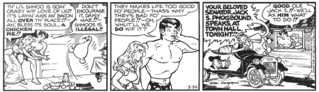
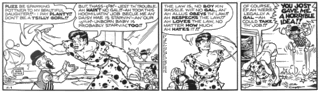
Like a giant modern Prometheus in its boyhood growing into adolescence, human productive potential is right now being forced to contain its bulging body in the rigid childhood suit of armour provided for it by its wicked capitalist guardian. The spectacle is ridiculous - Li'l Abneresque (Li'l Abner) - shmoos are popping up everywhere ("shmoos is bad fo people" ), and yet "we" have to exterminate them for the "good of society" ("ah loves the law").
Marx wrote well over a century ago that finance capital (as a fully developed bank and credit system):
The banking system, so far as its formal organization and centralization is concerned, is the most artificial and most developed product turned out by the capitalist mode of production, a fact already expressed in 1697 in Some Thoughts of the Interests of England. This accounts for the immense power of an institution such as the Bank of England over commerce and industry, although their actual movements remain completely beyond its province and it is passive toward them. The banking system possesses indeed the form of universal book-keeping and distribution of means of production on a social scale, but solely the form. We have seen that the average profit of the individual capitalist, or of every individual capital, is determined not by the surplus-labour appropriated at first hand by each capital, but by the quantity of total surplus-labour appropriated by the total capital, from which each individual capital receives its dividend only proportional to its aliquot part of the total capital. This social character of capital is first promoted and wholly realized through the full development of the credit and banking system. On the other hand this goes farther. It places all the available and even potential capital of society that is not already actively employed at the disposal of the industrial and commercial capitalists so that neither the lenders nor users of this capital are its real owners or producers. It thus does away with the private character of capital and thus contains in itself, but only in itself, the abolition of capital itself. By means of the banking system the distribution of capital as a special business, a social function, is taken out of the hands of the private capitalists and usurers. But at the same time, banking and credit thus become the most potent means of driving capitalist production beyond its own limits, and one of the most effective vehicles of crises and swindle.
Capital III Part V (Division of Profit) Chapter 36 (Precapitalist relationships) (a few pages before the end of the chapter)
So a world controlled by a fully developed banking and credit system (imperialism) is ready for the next "generation" of human society, socialism. Imperialism is capitalism pregnant with socialism, as Marx shows here and Lenin and Trotsky reiterated.
The problem is really more about politics and power than about economics - how can the majority of human beings, locked up as they are in their individual imperialist states, wrest control of the world economy and world power structure(s) from their current pro-monopoly, pro-banking-and-credit, pro-"capitalist" governors?
Subscribe to:
Posts (Atom)
[ Reply to This ]